Subway Art Exhibition (Fort Napoléon, Ostend)
Immersive engineering, narrative pacing, and audiovisual creation for the retrospective dedicated to the underground origins of graffiti (1960s to present day). Project designed and deployed by the Crafteke collective based on a full creative carte blanche, structured around the story of "Dylan", a fictional graffiti artist co-created with Bruno Brunet and Benoît Brasseur. Exhibition covered in Urban Arts Magazine.
Narrative Vision & Experience Design
The exhibition was structured as a one-way immersive journey where visitors gradually experience different facets of underground graffiti culture:
- A 5-act narrative arc: From the thrill of illegal trespassing (Pepper's Ghost) to the moral verdict of society (The Tribunal), each room corresponds to a pivotal stage in a graffiti artist's journey.
- Pacing and tension management: Leveraging the fort's stone architecture to alternate between visual contemplation, physical sensory shocks (subway vibrations and sirens), and direct interaction.
- Immersion through action: Replacing passive wall text with hands-on interactions (painting with light using a reconditioned spray can, voting via an industrial button) to make visitors active participants.
Context & Production Challenges
- Heritage conservation: Intervening inside Fort Napoléon (a heritage-listed building) imposed strict constraints: no drilling, heavy anchors, or structural alterations to the stone walls.
- 100% autonomous operation (Zero staffing): No technical or security personnel on site. The installations self-manage and withstand high visitor traffic during museum opening hours.
- Isolated hardware architecture (Offline): The thickness and layout of the fort prevented any network cabling between rooms, requiring each installation to run independently on a standalone Raspberry Pi 3.
Conception & Audiovisual Creation (Crafteke)
- Ideation & Carte blanche: Original design of interaction mechanics, visual narrative, and user flows across all 5 installations.
- Audiovisual content creation: Complete production of motion design animations, visual compositions, and spatial audio soundscapes in Adobe Audition.
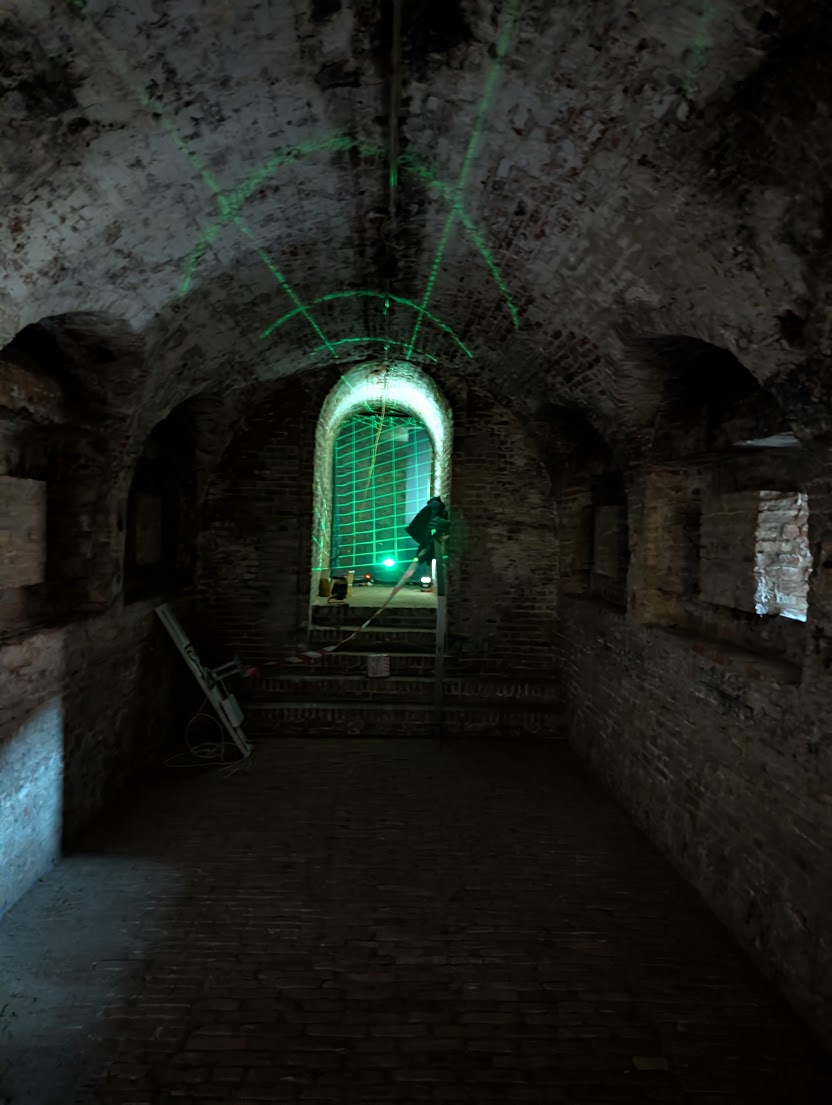
- 3D Digital Twin (Unity): Pre-visualization of the fort in Unity to validate projection angles, DMX/Art-Net lighting coverage, and physical equipment placement on-site.
- Prototyping & R&D: Prototyping interactive logic, testing AI models, and converting physical objects (spray paint cans) into custom electronic controllers.
Breakdown of the 5 Installations
1. Interactive Pepper’s Ghost & AI Vision
Narrative Intent: Plunge visitors immediately into the feeling of illegal trespassing. Upon entering the room, the audience surprises the graffiti artist Dylan among the rubble, triggering his flight.
Challenge: Orchestrate the sudden appearance of Dylan the graffiti artist and instantly react to approaching visitors without visible hardware.
Solution: Rear projection on a semi-transparent screen to create a Pepper's Ghost illusion in the middle of the set. Autonomous video analysis using a Nuxonis camera and a custom YOLO model running on a dedicated Raspberry Pi 3: the character detects the visitor and flees. Video cuts are hidden by DMX-controlled voltage drops via Art-Net, simulating flickering cellar lights.
2. TV Totem (Archives & Pop Culture)
Narrative Intent: Immerse visitors in the media landscape of the 80s and 90s. The stacked CRT screens reflect how graffiti spread through contemporary popular culture.
Challenge: Deliver a narrative video fresco on a raw stack of vintage CRT televisions.
Solution: Precision projection mapping and custom calibration using MadMapper. The audiovisual composition blends archival footage of the New York subway with references to modern pop culture.
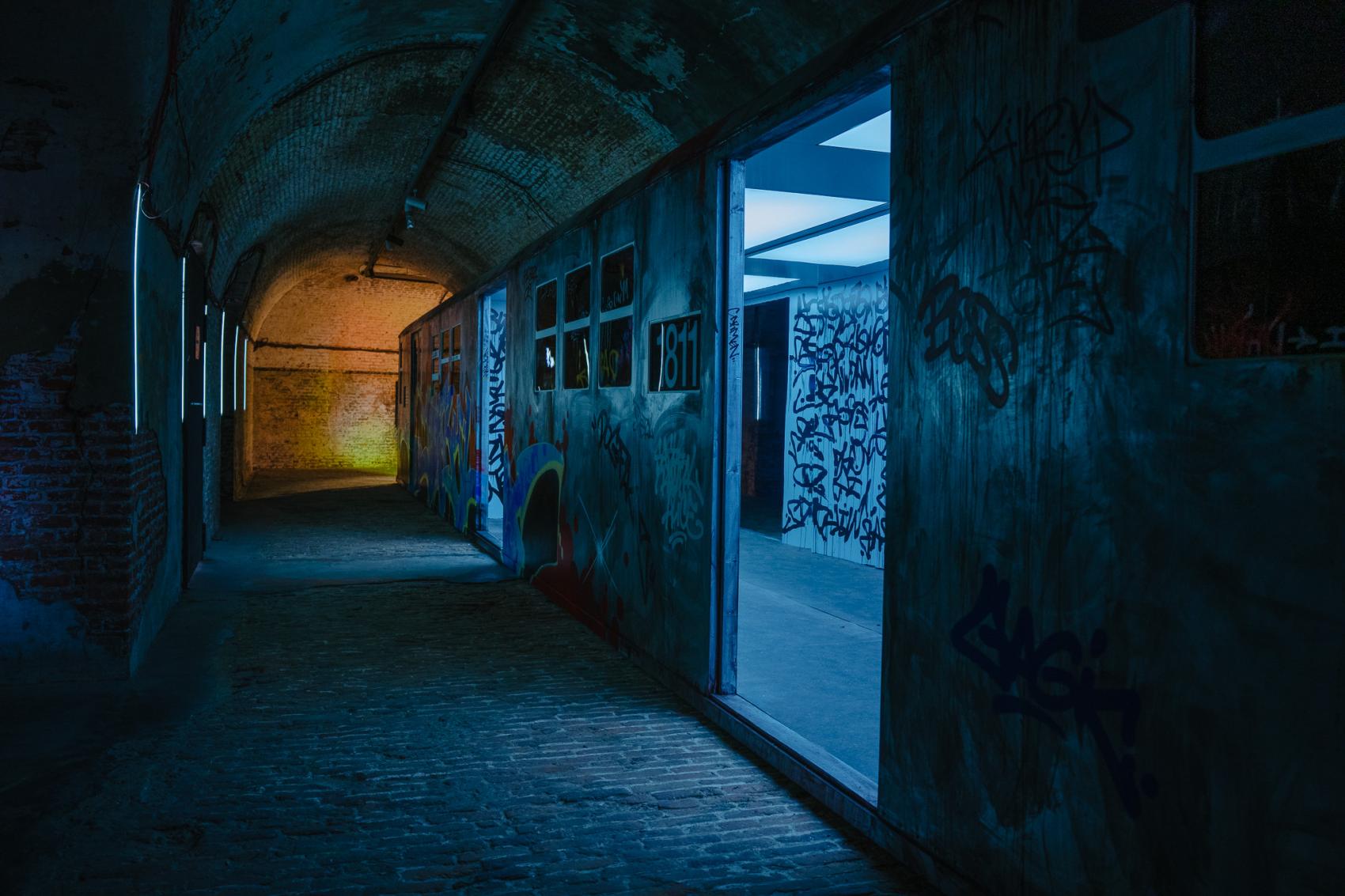
3. Immersive Subway Car Space
Narrative Intent: Deliver a physical and auditory shock. Visitors experience the speed, danger, and tension of a chase inside subway tunnels, the iconic canvas of graffiti culture.
Challenge: Recreate the atmosphere and tension of a moving subway car inside a static stone room.
Solution: Underground soundscapes (wind, dripping water, abandoned stations) crafted in Adobe Audition with spatialized audio rendering. Passing trains are simulated via audio sweeps synchronized with DMX/Art-Net LED strip animations. A chase sequence (sirens, flashing lights, running footsteps) takes visitors by surprise. Inside the car, low-frequency transducers vibrate the structure, combined with localized PA announcements ("Fort Napoléon") and door-chime signals.
4. Eye-Safe UV Spray Can (Reactive Fresco)
Narrative Intent: Give visitors the freedom of creative expression. The experience turns the public into active participants by allowing them to draw directly on the walls using a familiar physical tool.
Challenge: Offer a tactile, reactive tagging experience in complete autonomy, without damaging the historic building.
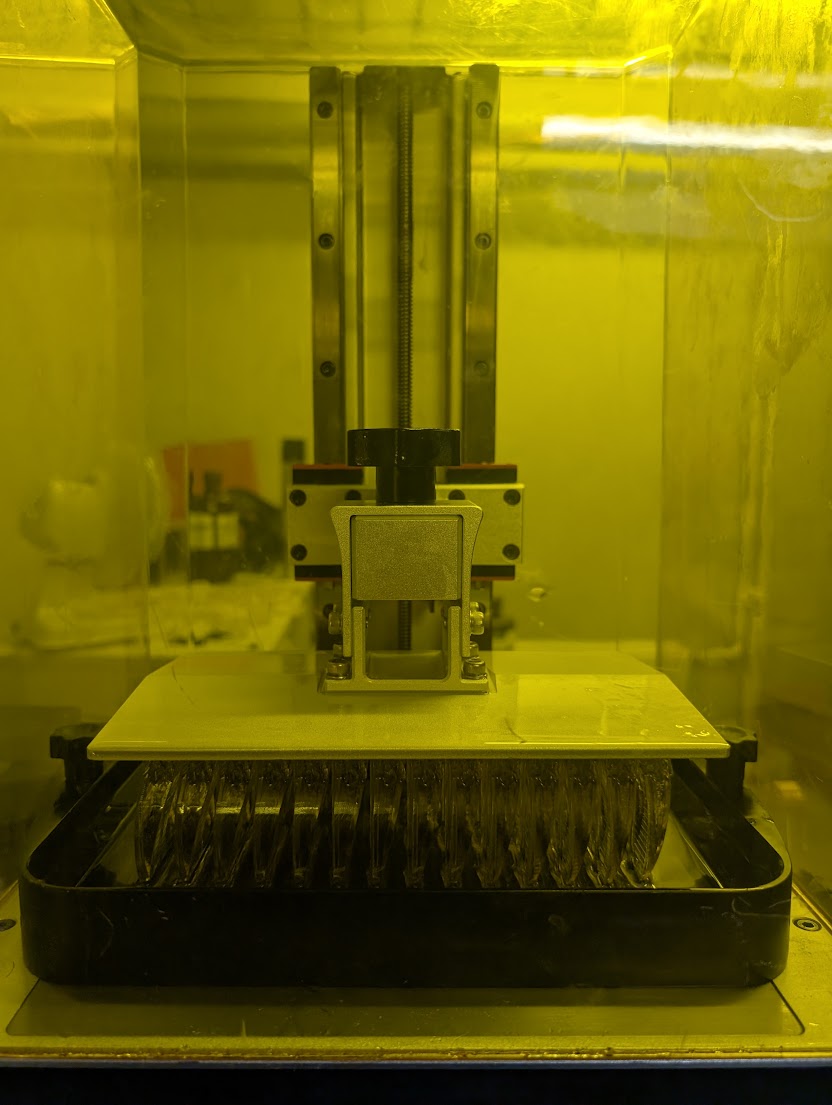
Solution: R&D concept based on reconditioning real, emptied spray paint cans. Integrated custom electronics (3D printed / UV) and high-power Eye-Safe certified UV LEDs. Visitors paint directly with light on a wall covered in custom phosphorescent vinyl with controlled glow persistence.
5. The Graffiti Tribunal (Roulette of Fate)
Narrative Intent: Conclude the journey with a moral dilemma. Visitors finalize their creation, but leave it to institutional luck to decide their artwork's fate: recognized masterpiece or punishable vandalism.
Challenge: Question the dual nature of graffiti (art vs. vandalism) through a durable interaction interface.
Solution: Custom console featuring an industrial spray-can button linked to an independent Raspberry Pi 3. Pressing the button generates a tag on screen and triggers a casino-roulette animation (After Effects & Blender). The final verdict is randomly drawn and lights up via DMX/Art-Net in MadMapper: the tag is immediately overlaid with either a museum masterwork frame or prison bars.
Press & Media Coverage
Read the dedicated exhibition review on Urban Arts Magazine: Subway Art: Behind the scenes of graffiti.
Field Challenge: Autonomy Under Real Conditions
Context: A critical week of the build ended up with the team cut in half following a health emergency, with no way to push back the opening date.
Solution: Solo takeover of every front in parallel - construction, electronics, and software integration - to keep the schedule without interruption.