Laser Design & Light Tipi (Petit Camping Festival)
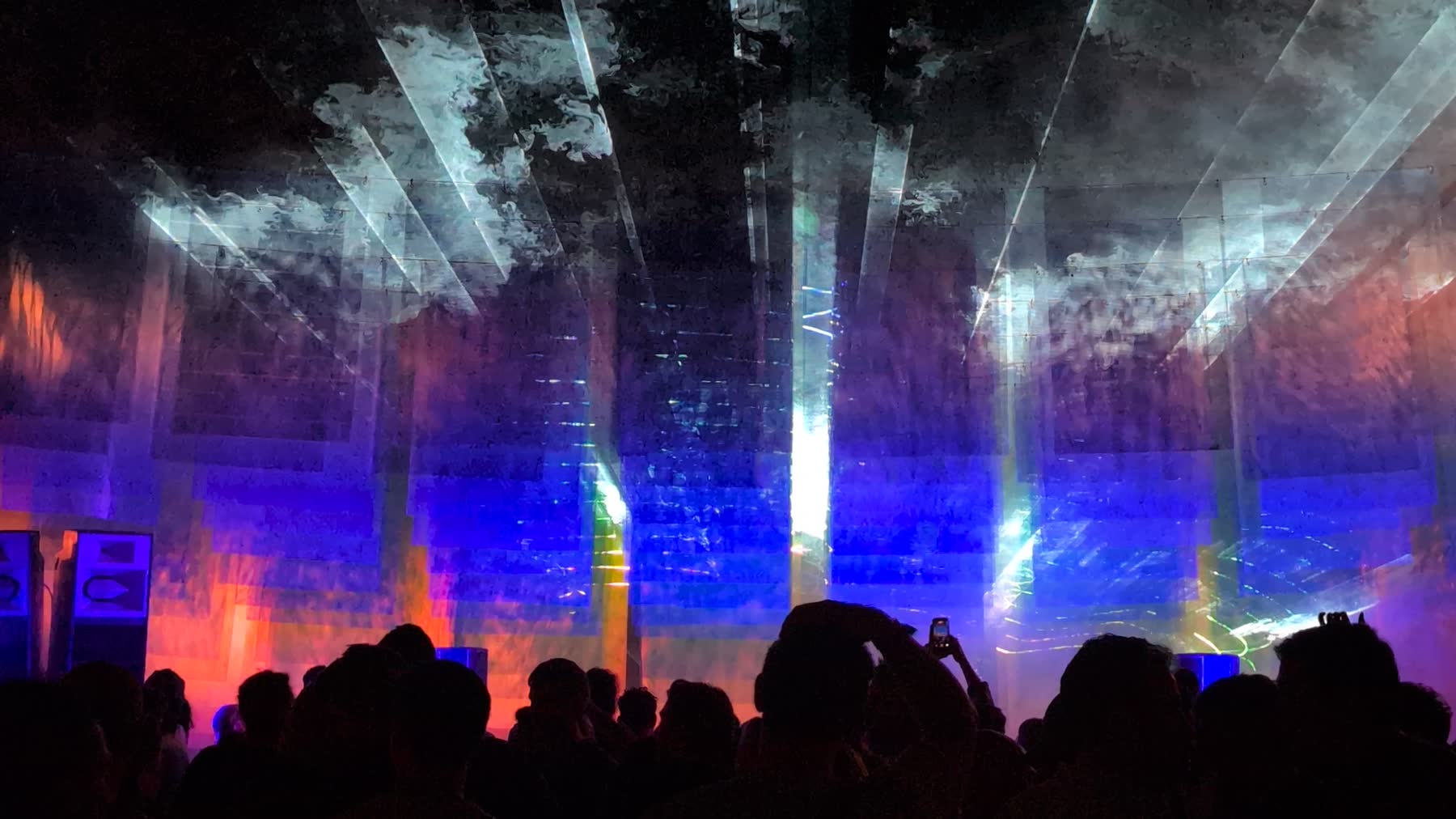
Laser design for the main stage, and software control for the laser tipi conceived and built by Pierre-Henri Wibaut, hoisted into the trees of the campsite the festival is named after.
Context & Challenges
- A stage to fill with volume: go beyond decorative beams and build readable planes of light from the crowd, with no screen and no heavy structure.
- An existing lighting desk: the operators had to keep control of the lasers from their own console, without learning a new tool mid-festival.
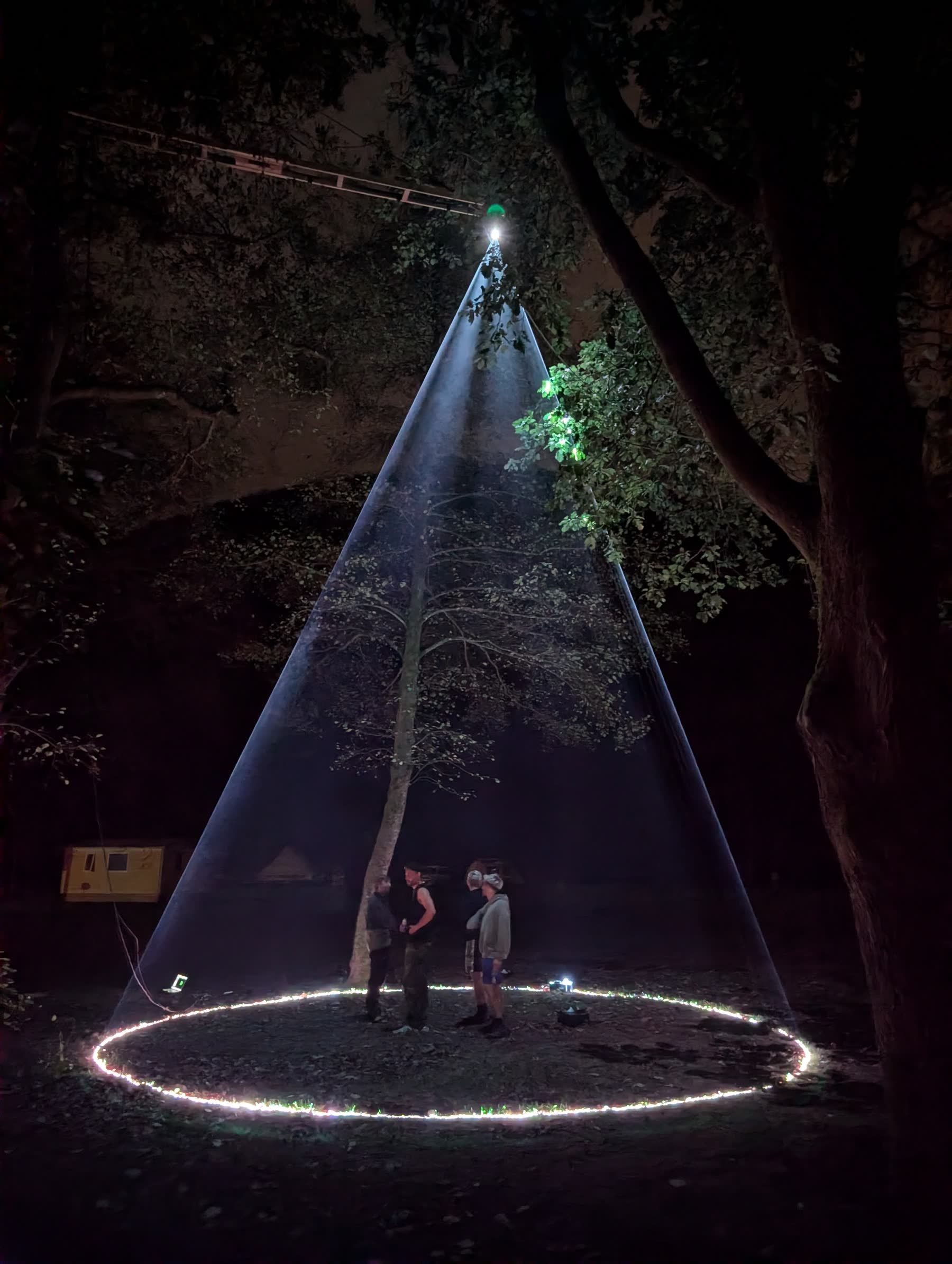
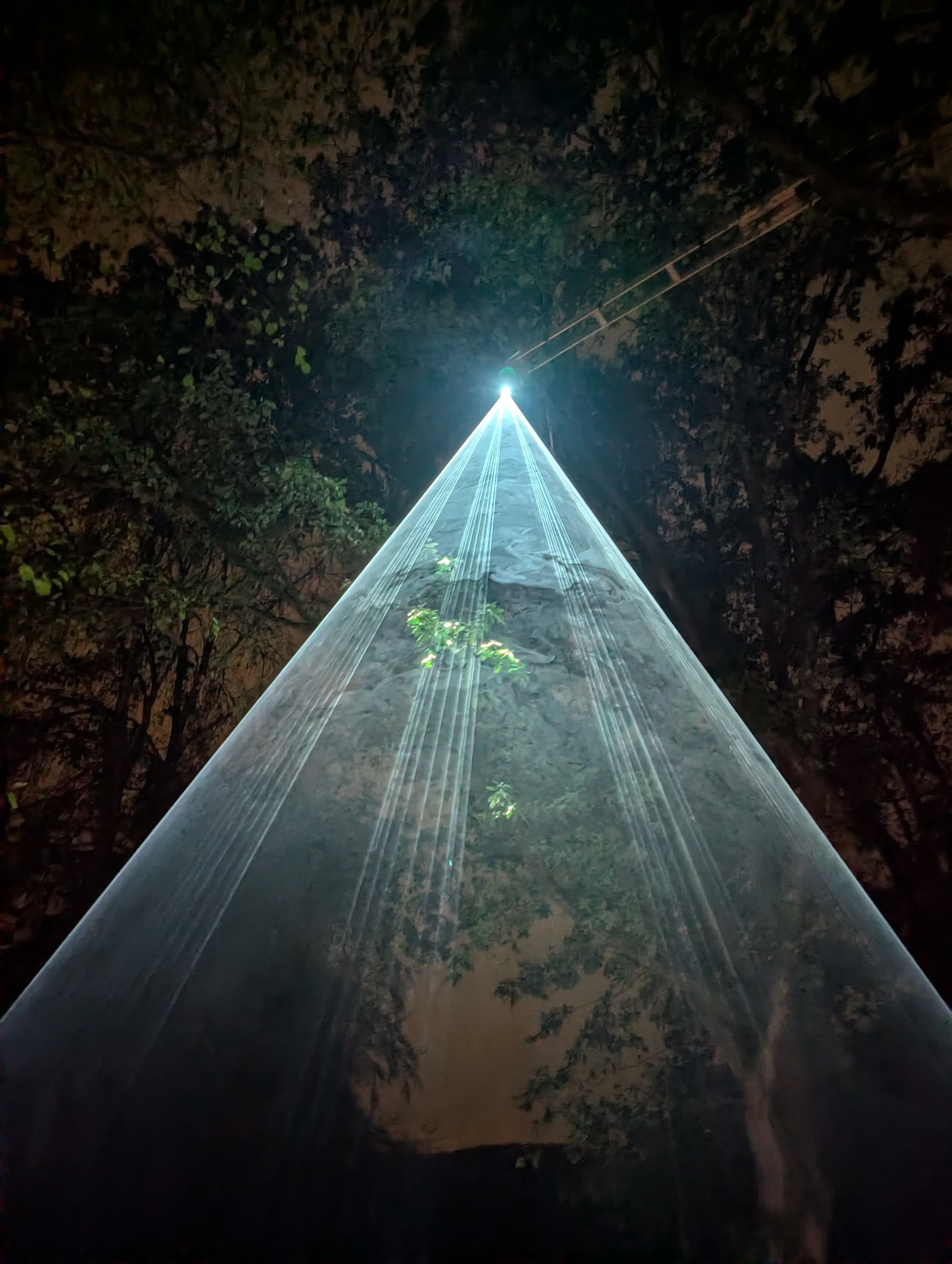
- A landmark visible from afar: the festival wanted a strong marker. Pierre-Henri proposed and built the laser tipi, echoing the campsite the festival is named after.
- Standalone operation: the installation had to be switched on, tuned and shut down every night without heavy technical intervention.
Engineering & Method
- Calibration & sequencing: laser head alignment and sequence authoring in MadMapper, designed to stay readable through the medium.
- Lighting desk to laser bridge: a DMX link letting the console drive colour, played content and active zones, split into three planes (top, middle, bottom).
- Depth through colour filtering: the tulle sheets respond differently depending on the beam spectrum. A given colour catches some sheets and passes through others without revealing them, which lets you choose the plane where light appears and build real depth instead of a flat lit curtain.
- Remote control: a Python script with a web interface, reachable over the local WiFi, driving lasers, haze and fans from a phone.
Technical Breakdown
1. Main stage: lasers, tulle and a shared desk
Challenge: achieve a sense of volume on an open air stage while leaving the lighting operators in charge from their usual console.
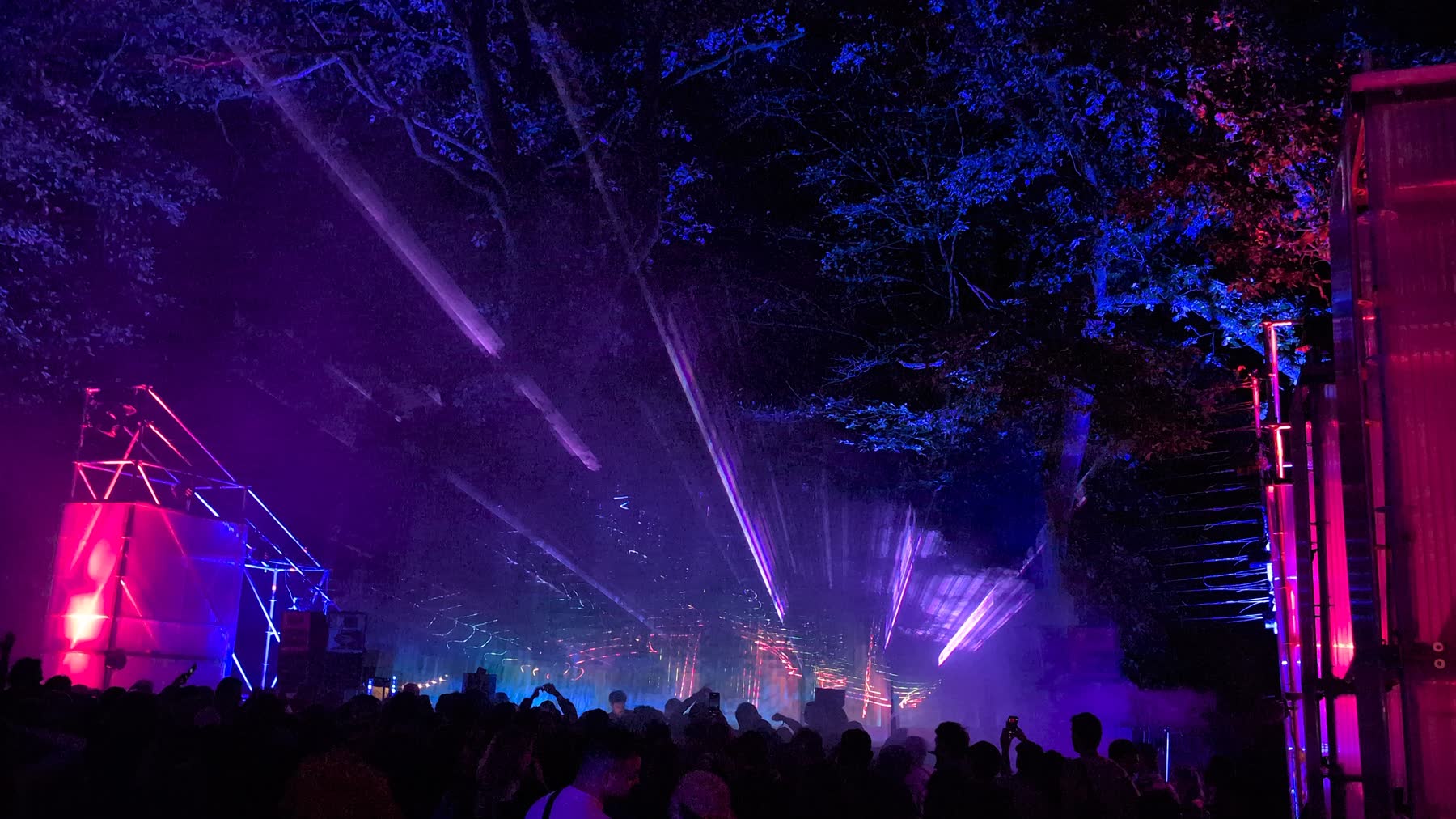
Solution: beams are cast into sheets of coloured tulle hung at several depths. The interesting part is the filtering: depending on the laser spectrum, a beam becomes highly visible on one sheet and nearly invisible on another. By playing colour against fabric tint you decide how far away the light materialises, sculpting depth rather than lighting a curtain. A DMX bridge gives the desk control over colour, content and the three zones (top, middle, bottom). The audience responded instantly, many describing the effect as holographic.
2. Laser tipi: hanging a head ten metres up
Challenge: Pierre-Henri's idea required a laser head ten metres high, with no existing structure and no way to lift heavy gear inside woodland.
Solution: a six metre wooden mast, built by the two of us, then hoisted and guyed into a tree with ropes and pulleys. The laser head sits at its tip, the control gear stays on the ground, and the cone of beams reaches down to a lit circle tracing the base of the tipi, ten metres below.
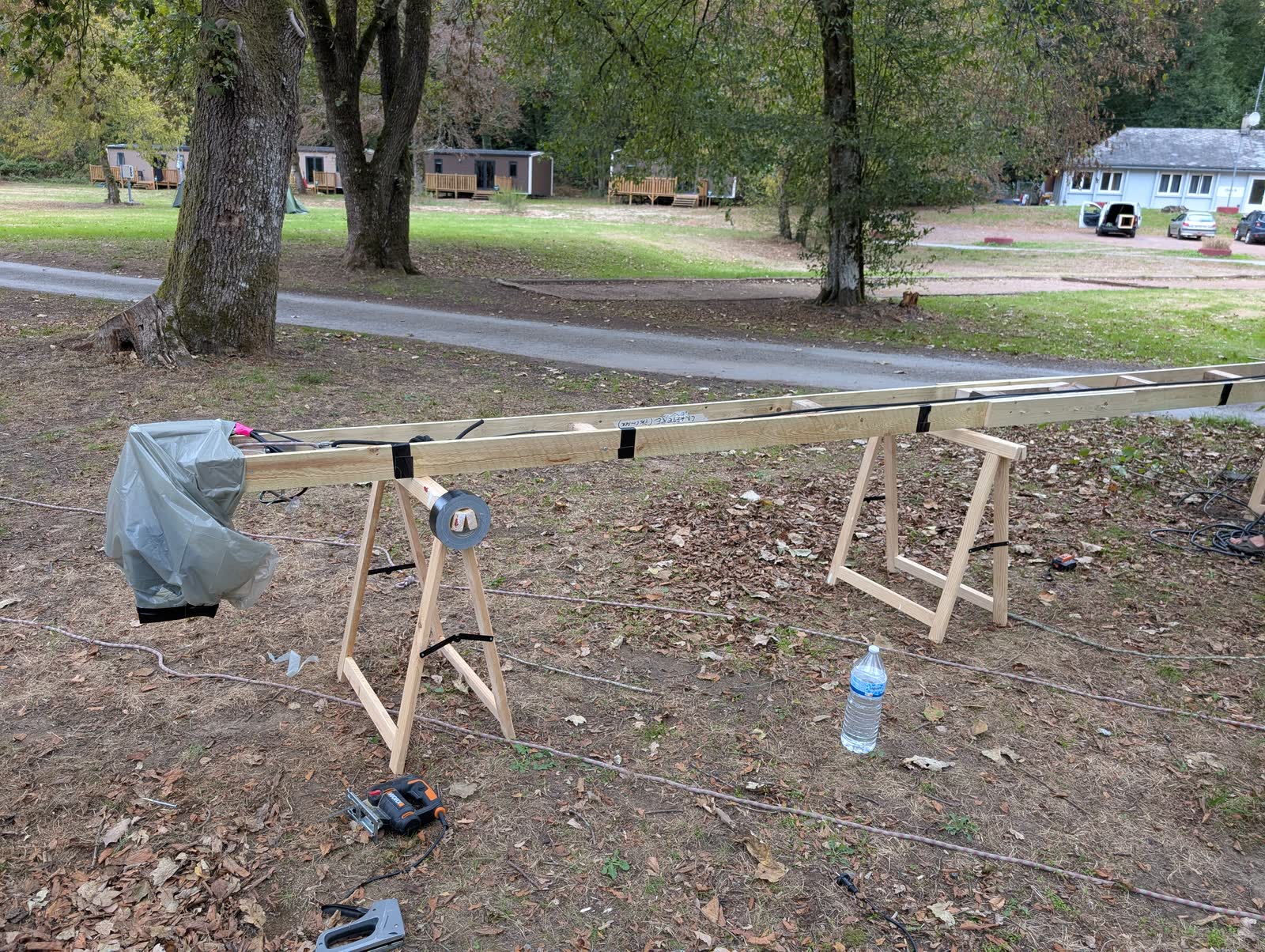
Who did what: the tipi concept is Pierre-Henri's. We built the mast together, then he climbed the tree while I belayed him, and we hoisted the mast with him up there. My side afterwards: the laser sequences for the tipi and the control system.
3. Haze, airflow and web control
Challenge: without particles in the air a laser beam stays invisible. Haze had to be produced and pushed upward continuously, and tuned without walking back to the mast.
Solution: a small Python script with a web interface over local WiFi, to make the installation self sufficient. It talks to MadMapper and drives the chain: laser colour, DMX configuration of haze machines and fans, powering on and off, and delays between bursts. The point was not to build a tool, but to spare anyone the walk back to the mast every night.
4. A testing tool born on site
Challenge: validate the DMX chain on location, at night, without carrying a control laptop for every check.
Solution: built DMXorcist, an Android DMX512 testing app that pushes a colour to the entire patch and immediately exposes the fixture that is not following. Released as open source: github.com/Lectrov/DMXorcist
Laser co-creation: Pierre-Henri Wibaut and Sébastien Lebon.
Tipi concept: Pierre-Henri Wibaut.
Studio: Crafteke.
Tipi concept: Pierre-Henri Wibaut.
Studio: Crafteke.