Two Monumental Installations for a Museum Opening
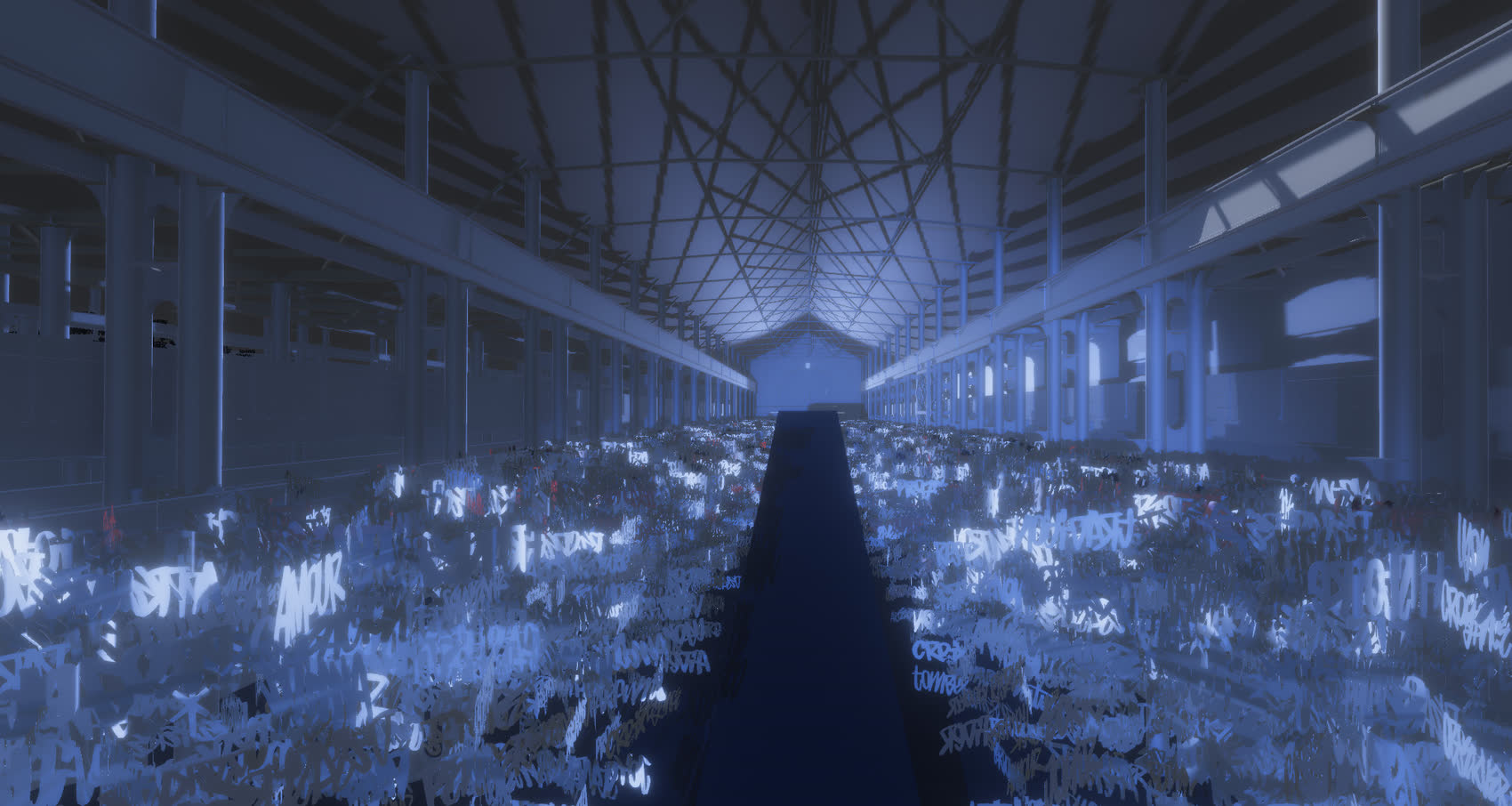
A scenographic study for two monumental installations built from the artist's own words, cut out and suspended inside a former industrial hall. My work covered the simulation of the site and the tools letting the artist compose, validate, then move to production. The project was eventually cancelled.
Context & Challenges
- Designing for a site you cannot occupy: the artist had to imagine two monumental pieces inside a hall he could not freely access, working only from the building's 3D model.
- The visit before the piece: route, visitor flow, capacity and legibility from ground level all shaped the form of the installations themselves.
- Composing with over 7,000 words: the latest version of the cave held more than seven thousand, with the goal that each one be unique. At that scale nothing can be drawn by hand: it needed a way to try volumes, compare them, and step back.
- Reaching production: once a composition was approved, the workshop needed to know exactly which words to make, in how many copies, and where to hang them.
Engineering & Method
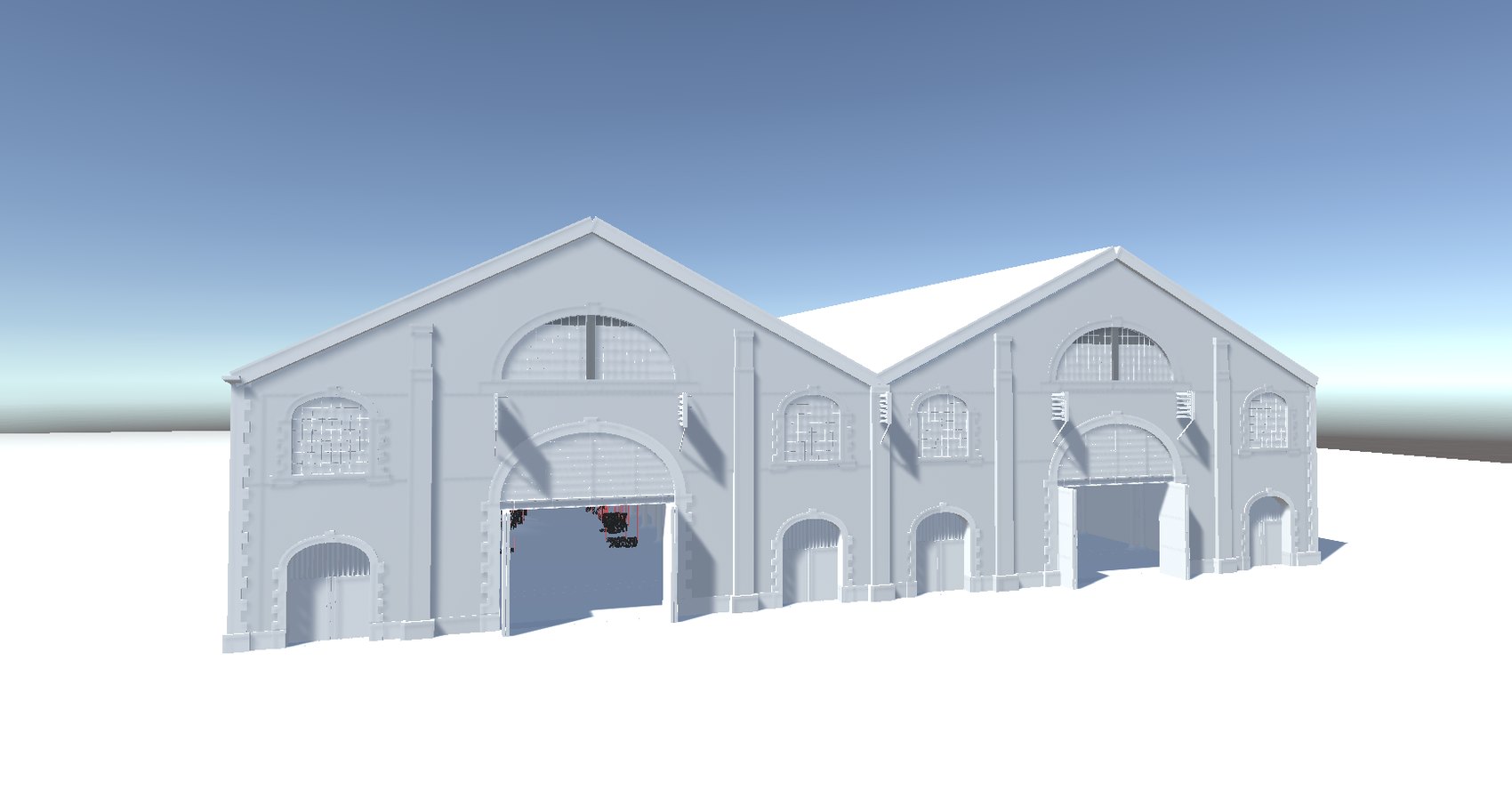
- Digital twin of the building: import and optimisation of the hall's 3D model in Unity, as a testing ground for every scenographic hypothesis.
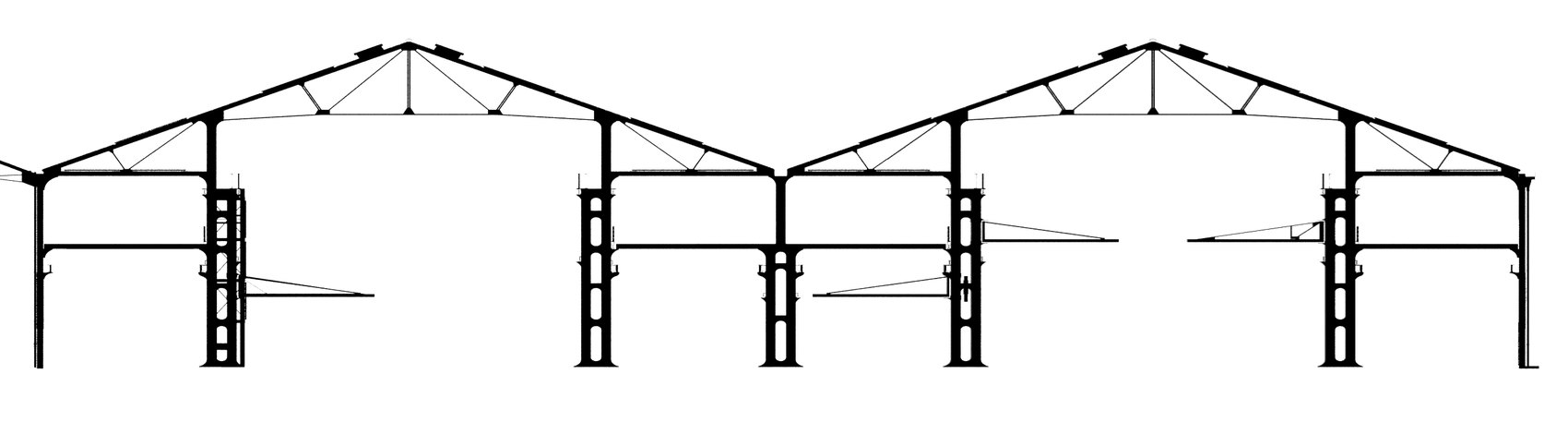
- Working sections: silhouette slice renders of the building in Houdini, giving the artist a drawing support at his own scale.
- Digitising the words: a Houdini pipeline automatically turning marker written words into 3D models ready for use in Unity.
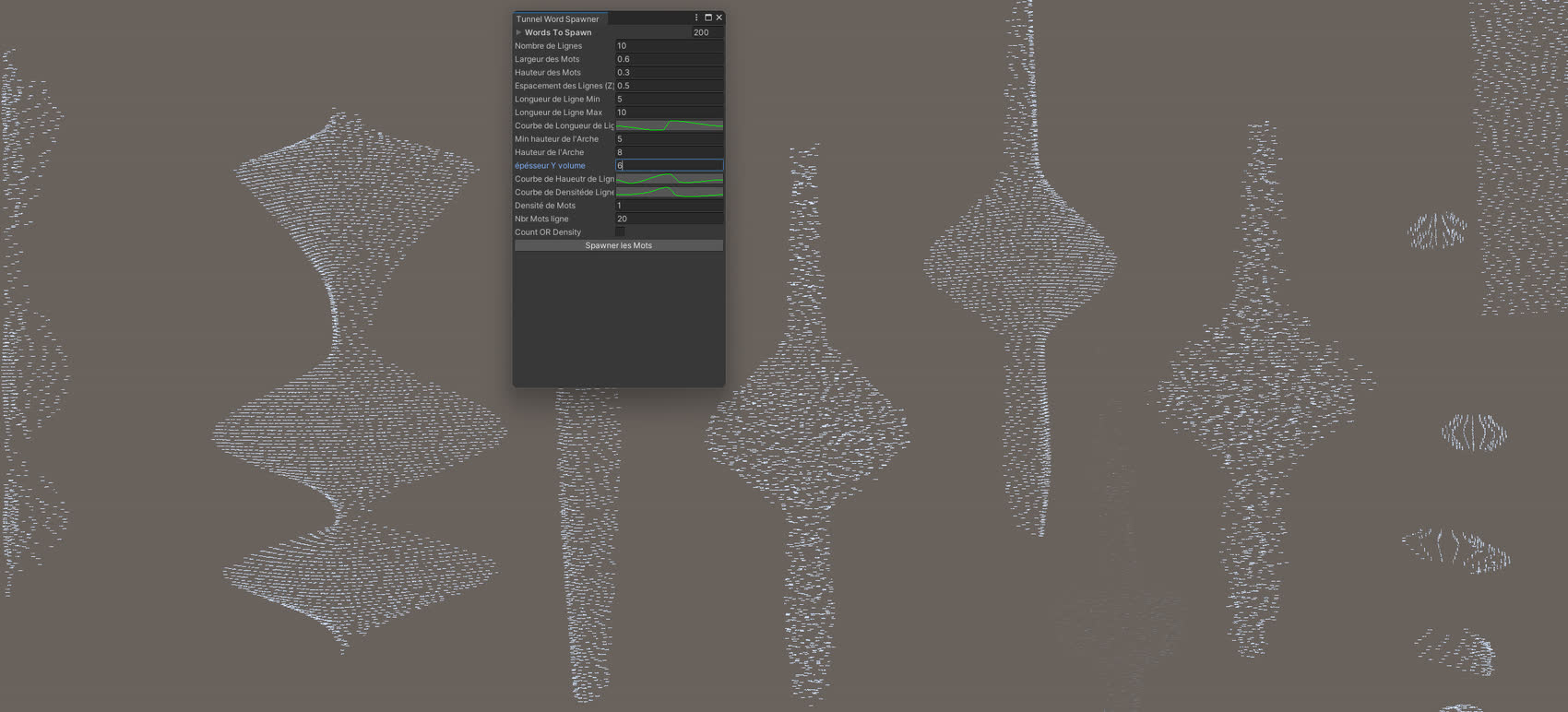
- Parametric generators: two Unity tools, one for the suspended word volumes, one for the kinetic installation, generating and comparing compositions in seconds.
Technical Breakdown
1. Making the building thinkable
Challenge: the artist works by hand, in real space. A raw 3D model pushed around with a mouse gives him nothing to compose with.
Solution: the building is imported and optimised in Unity to become a place you move through and try things in. In parallel, Houdini produces silhouette sections of the building, slice by slice, which the artist can print and draw on. The digital tool feeds the manual work instead of replacing it.
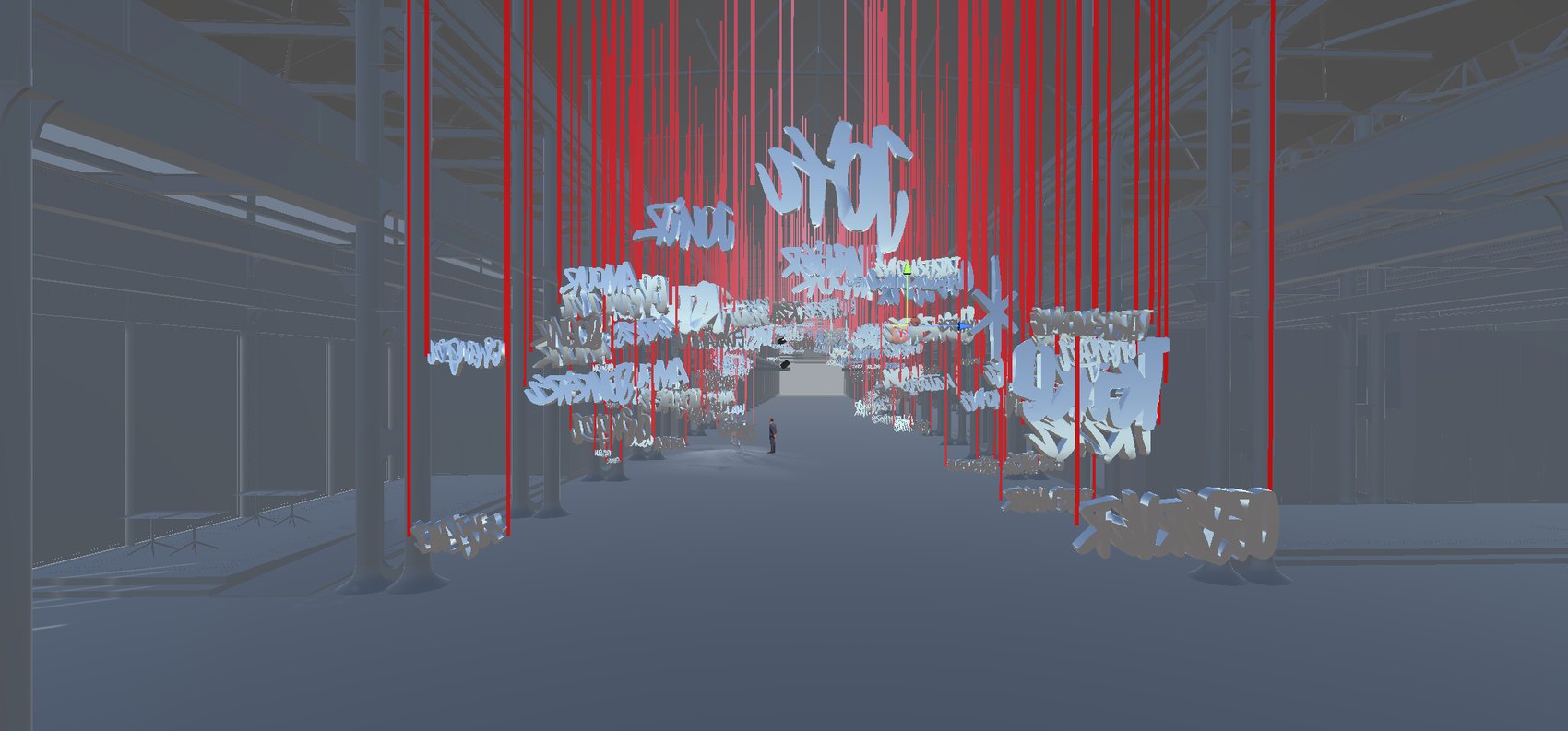
2. A generator of word caves
Challenge: the first installation was to form a suspended cave for visitors to walk through. Impossible to draw by hand: the shape depends on word count, density, the length of each line and the height under the roof structure.
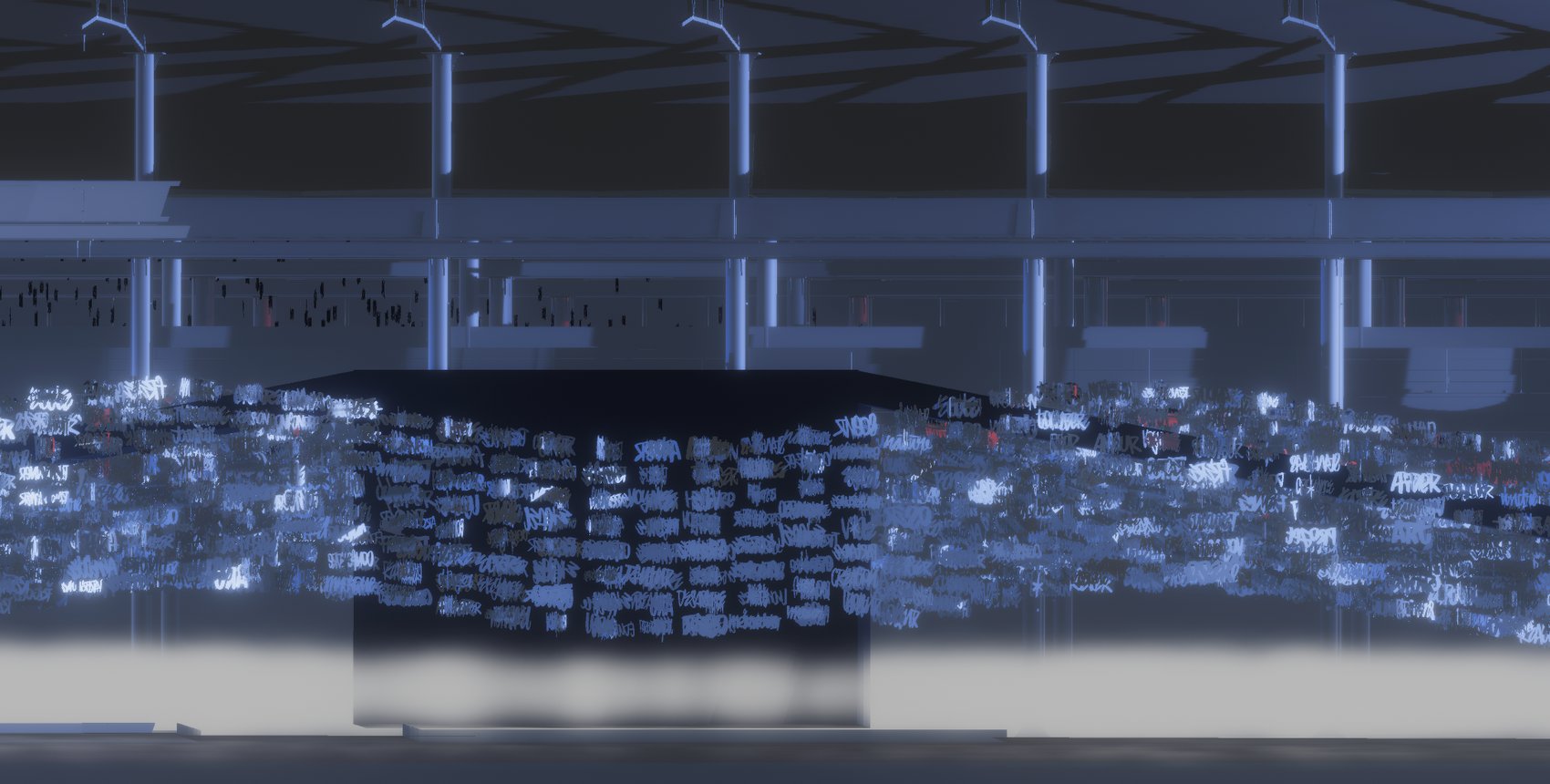
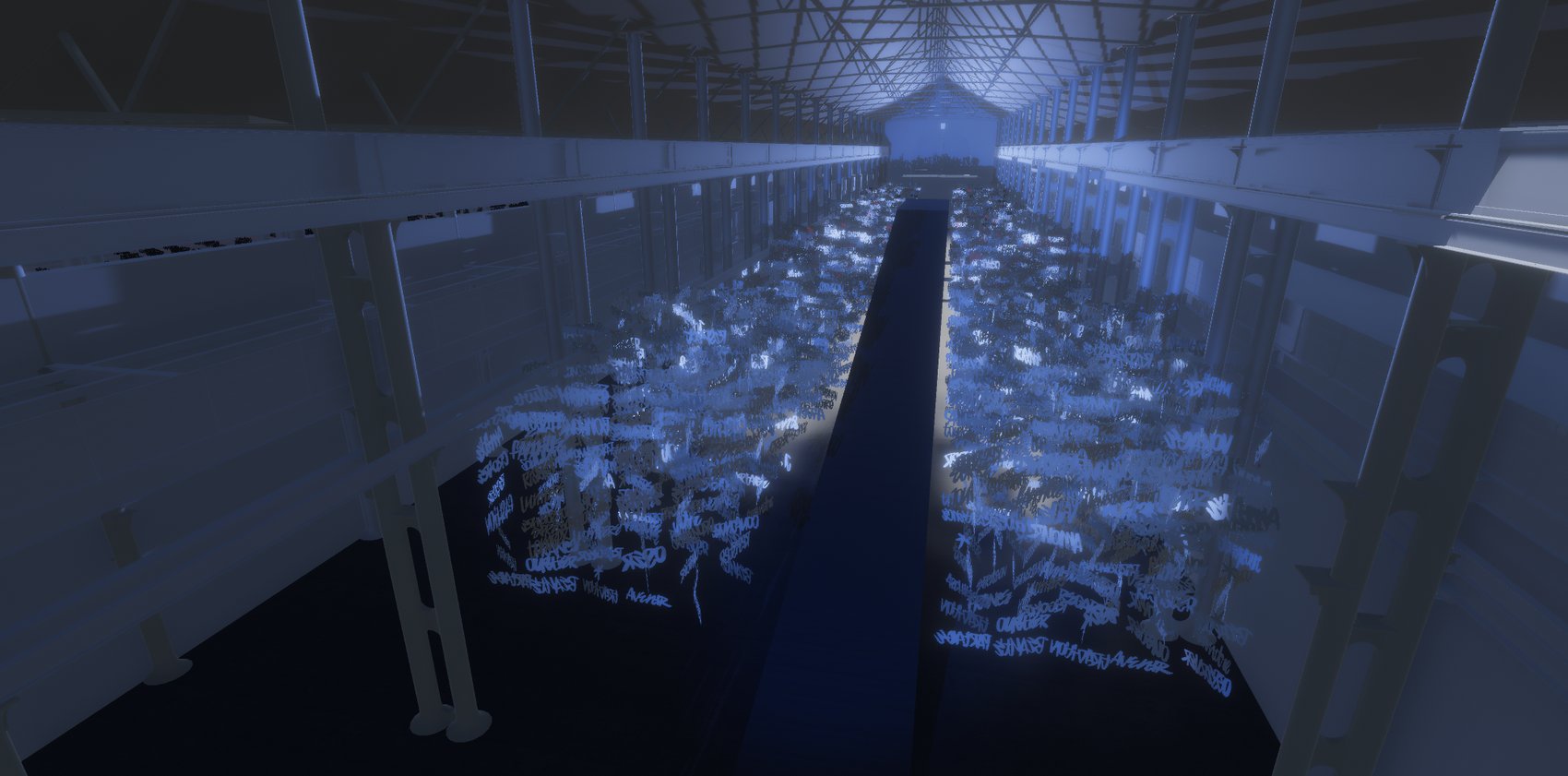
Solution: a parametric generator in Unity. Number of lines, minimum and maximum length, height and density curves, volume thickness, words per line: every setting redraws the cave instantly. The artist compares dozens of proposals instead of drawing a single one.
3. From marker on paper to assembly plan
Challenge: two breaks threatened the project. Upstream, the words exist on paper, drawn with a marker. Downstream, a composition approved on screen is worthless if the workshop does not know what to build or where to hang it.
Upstream solution: a Houdini pipeline automatically converts each handwritten word into a 3D model ready for Unity. Fifty words were digitised for the prototype, but the target was another matter entirely: over seven thousand words, nearly all different. At that scale manual digitising was out of the question, automation was the only way.
Downstream solution: every word carries an identifier, and the composition exports to JSON line by line: which words, how many, and where along their line. The file also gives the manufacturing count, for instance six copies of the word amour. A line by line render mode outputs each row as an image, for building a physical maquette.
4. The second installation, kinetic
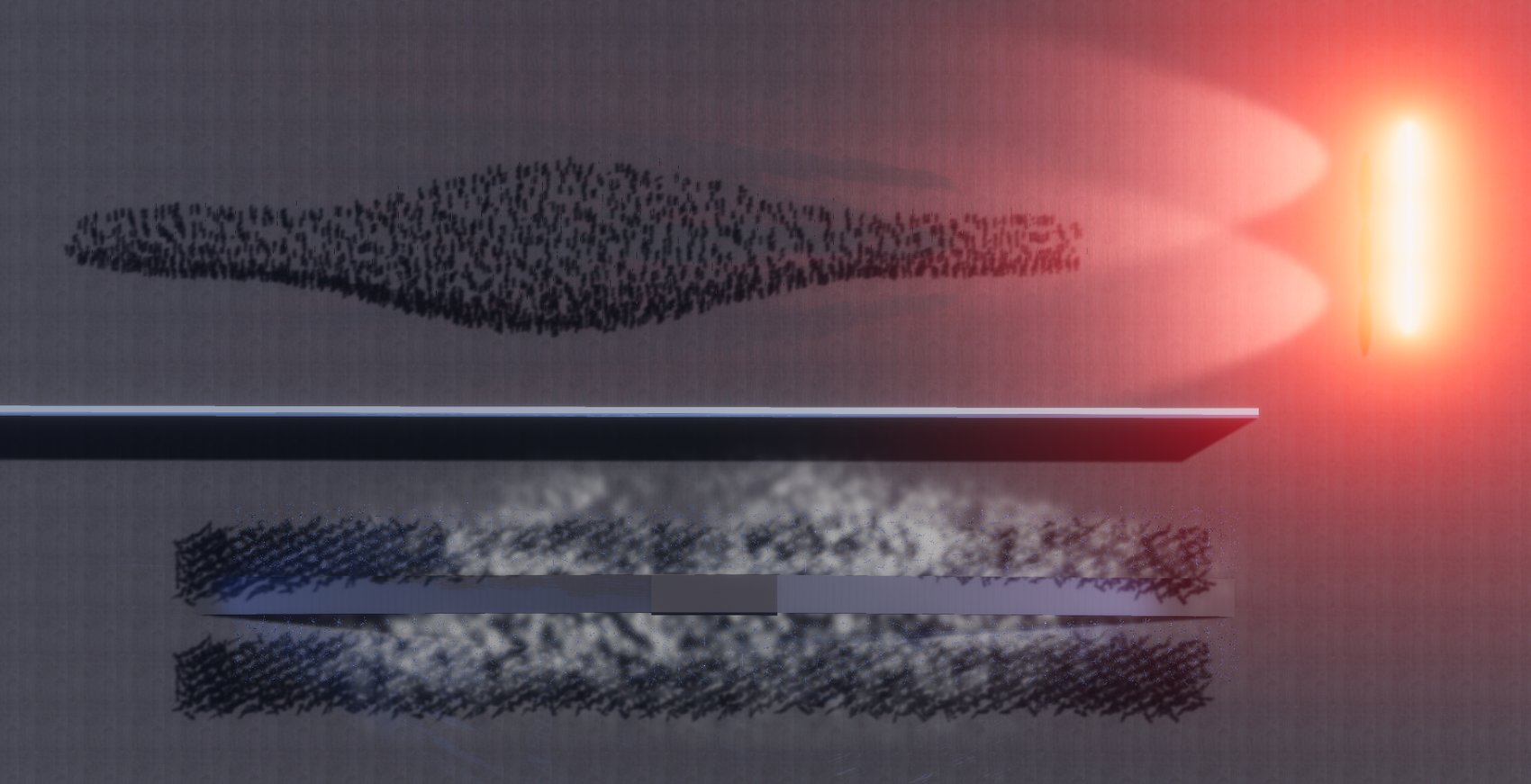
Challenge: the second piece relied on moving masts carrying words. Composition can no longer be judged on a still image, only on collective motion.
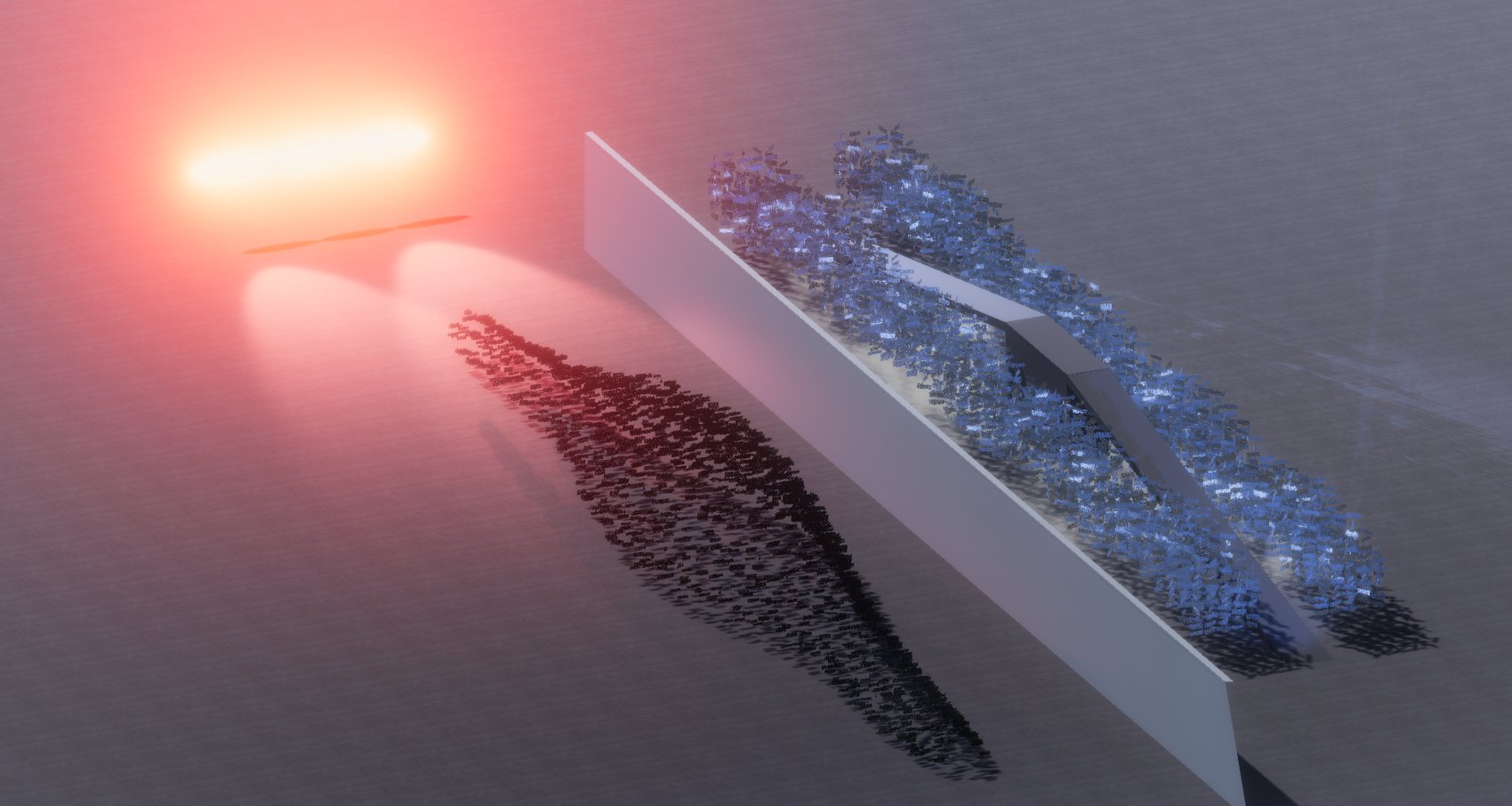
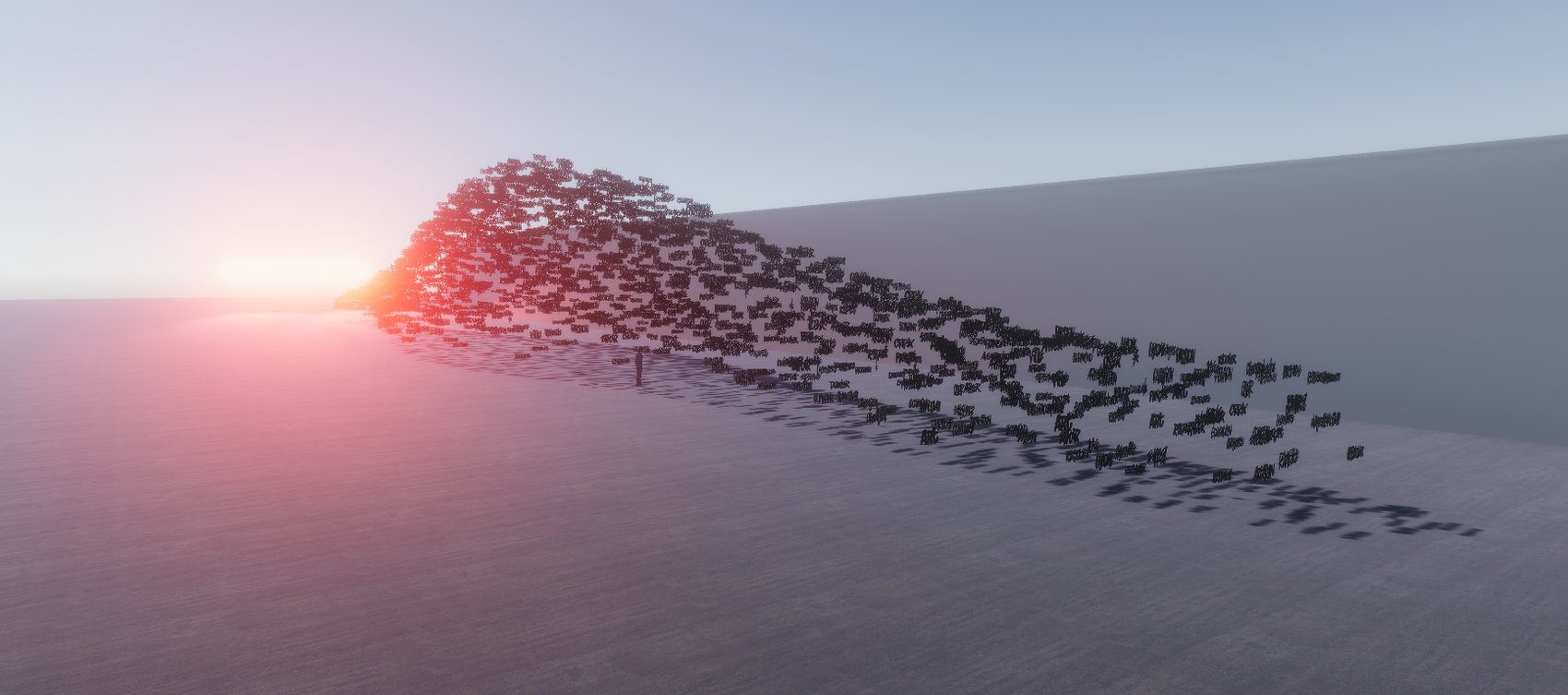
Solution: a second generator, with procedural wave animation running through the masts. The artist varies the motion parameters and immediately sees the ripple at room scale.
5. Route, atmosphere and validation
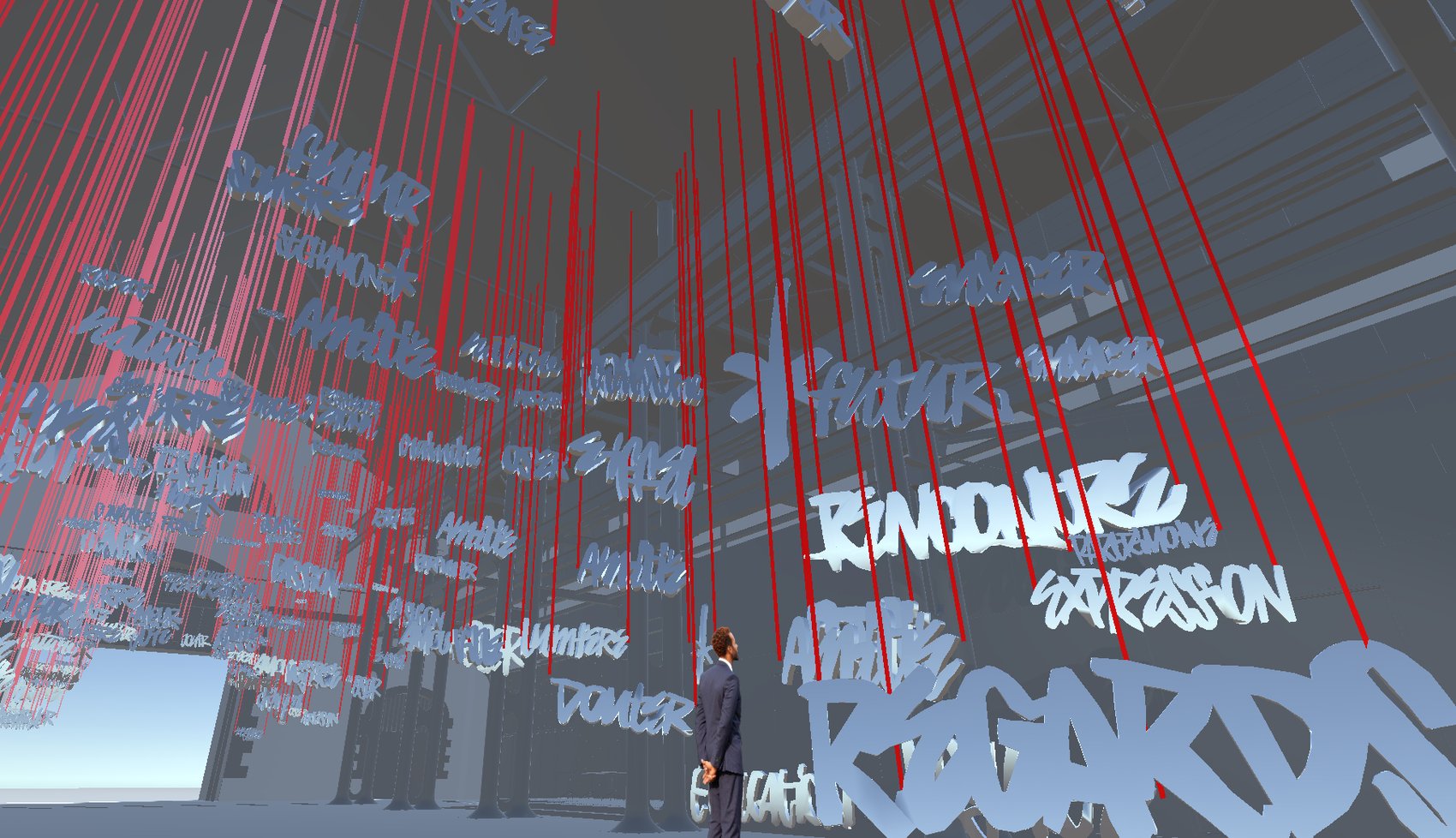
Challenge: validating a monumental scenography means seeing it from the visitor's position, under the intended lighting.
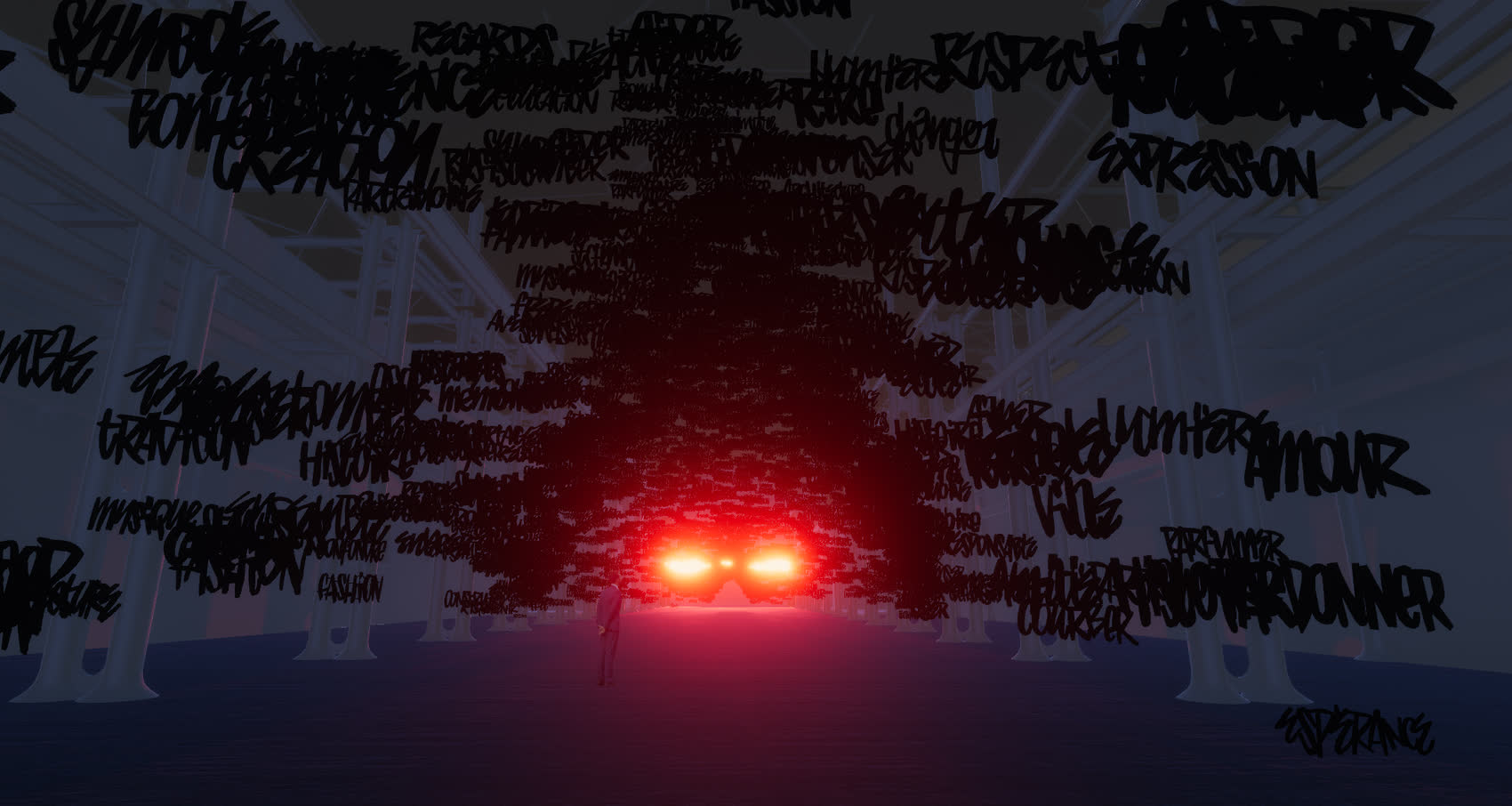
Solution: virtual walkthroughs rendered from Unity along the planned route, with lighting atmosphere studies. They served as discussion material at every stage of the project.
Atmosphere Studies
Light decides everything: depending on the source, the same composition becomes a dark mass, a drifting shoal of signs, or a luminous wall. These studies were used to settle the lighting direction of each installation with the artist.
Artistic direction and artwork: the artist, unnamed here as the project did not go ahead.
Simulation, tools and scenography: Sébastien Lebon.
Status: study carried out in 2024, project unrealised. The visuals shown are previews rendered in the real time engine.
Simulation, tools and scenography: Sébastien Lebon.
Status: study carried out in 2024, project unrealised. The visuals shown are previews rendered in the real time engine.